
If you’ve got food or supplement products on shelves (or plan to), here’s something you really need to know: the FDA just dropped a fresh update to its allergen labeling guidelines and it changes things.
Let’s break it down so you can skip the 38-page PDF and still avoid a labeling nightmare.
The Big 9
The FDA recognizes nine major food allergens. These haven’t changed, but here’s your quick refresher:
Milk, Eggs, Fish, Crustacean Shellfish, Tree nuts, Peanuts, Wheat, Soybeans, and Sesame.
Tree Nuts Are NOT Created Equal
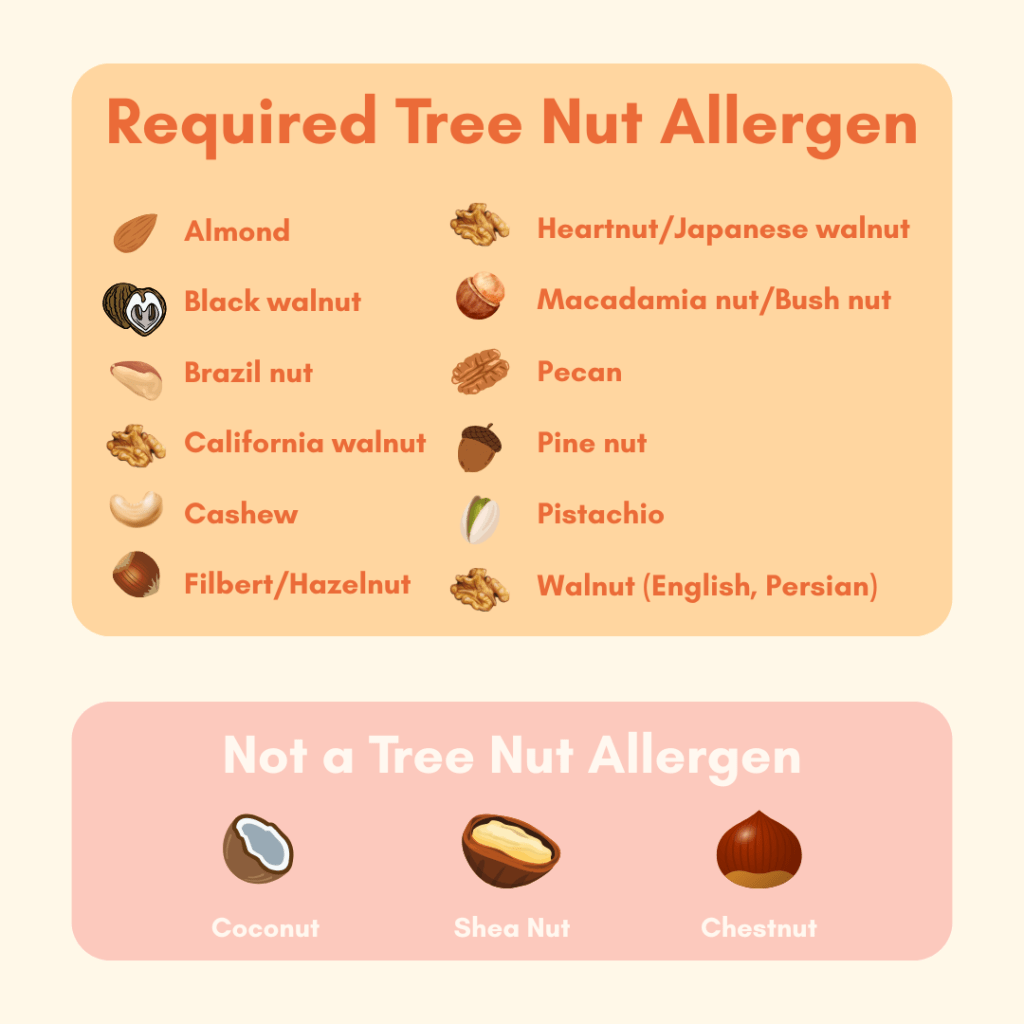
Here’s where it gets a little weird (classic FDA). Some foods that sound like tree nuts, and may even grow on trees, like coconut, chestnut, and shea nut, don’t actually qualify under the updated guidelines.
If you use coconut oil or chestnut flour, list it in your ingredient panel (because listing ingredients is always required), but skip the “Contains tree nuts” statement unless you’re actually using almonds, pecans, or the other big players. This is a small change that could save you from unnecessary reprints.
Milk and Eggs: Now More Inclusive Than Ever

The FDA now says milk isn’t just from cows, and eggs don’t have to come from chickens. If your product includes milk from goats, sheep, or water buffalo, or eggs from ducks, quail, or other birds, it still counts as a major allergen.
You need to call it out, even if your fancy farm-to-foil snack uses a heritage duck egg and a splash of goat milk kefir.
Cross-Contact: Still Not a Free Pass
Let’s talk manufacturing. The FDA doesn’t want “May contain…” to become your backup plan for sloppy production practices. Cross-contact warnings should be a last resort, not a Plan A.
If your equipment touches peanuts before it fills your protein puffs, you need proper cleaning protocols in place. Good manufacturing practices (CGMPs) are expected. No shortcuts.
Don’t Forget Bulk Containers
If you’re shipping ingredients or finished products in bulk bins, reusable totes, or anything that isn’t shrink-wrapped in aisle five, allergen labeling rules still apply.
Just because it’s “business-to-business” doesn’t mean you get a pass. If a major allergen is inside, the label must say so. Period.
So, What Now? Here’s Your Action Plan
- Check your labels for accurate allergen statements. Don’t assume last year’s version still works.
- Revisit your ingredient list. If you’re using sesame, update it. If you’re listing coconut as a tree nut, fix it.
- Train your team on these new definitions (especially milk and egg sources).
- Review your production process. Minimize cross-contact and document your cleaning procedures.
- Stay current. These guidelines will change again, and you don’t want to get left behind.
Allergen labeling might not be the most thrilling part of building your brand, but it is one of the most important. It protects your customers, keeps you on shelves, and helps you avoid surprise delistings or costly recalls.
Just like those fire drills we practiced way back in elementary school, stop, drop, and check your allergen statements.
Happy labeling!
Resources:
Questions and Answers Regarding Food
Allergens, Including the Food Allergen
Labeling Requirements of the Federal
Food, Drug, and Cosmetic Act
(Edition 5): Guidance for Industry, 2025
 Lauren Rockteacher Consulting
Leave a comment